



Melissa Maddison
She has spent more time arguing about AI than most people have spent thinking about it. Writes it all down so it isn't a total waste.

This guide breaks down the true economics of running AI agents, highlighting how recursive loops and expanding context windows cause unexpected API cost spikes. It demonstrates how implementing token-aware routing, execution limits, and multi-model gateway management via AnyAPI.ai can reduce operational AI expenditures by up to 60%.
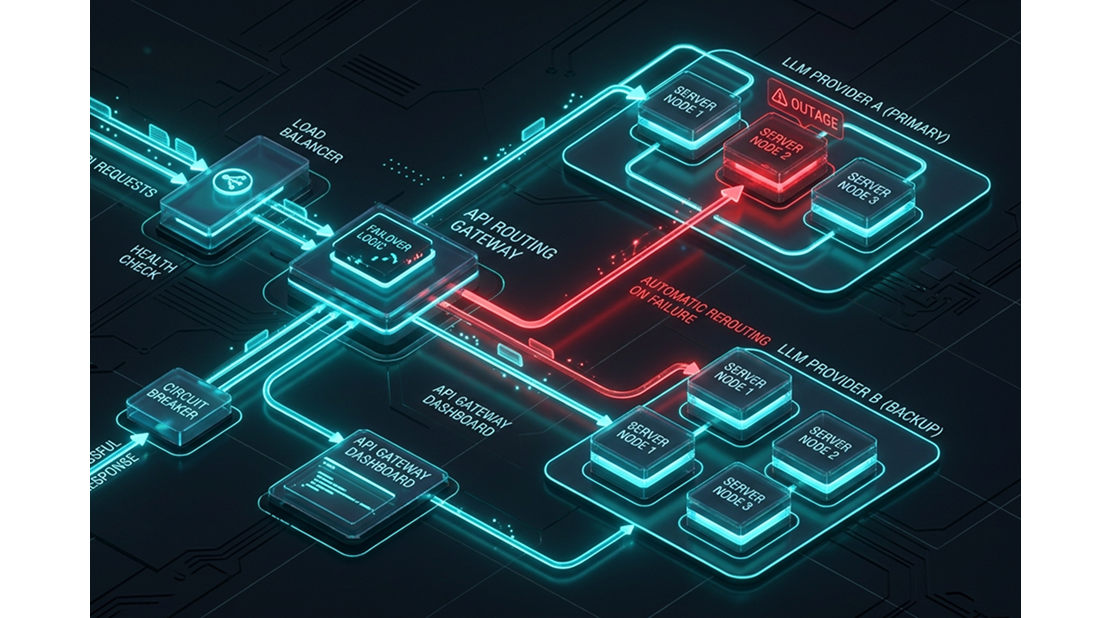
This comprehensive engineering guide details core LLM failure modes—including rate limits, outages, and latency spikes—and outlines architectural patterns for resilient multi-provider routing. It demonstrates how implementing automated failover via AnyAPI.ai's unified gateway eliminates application crashes to maintain 99.99% availability for critical AI agents and SaaS pipelines.
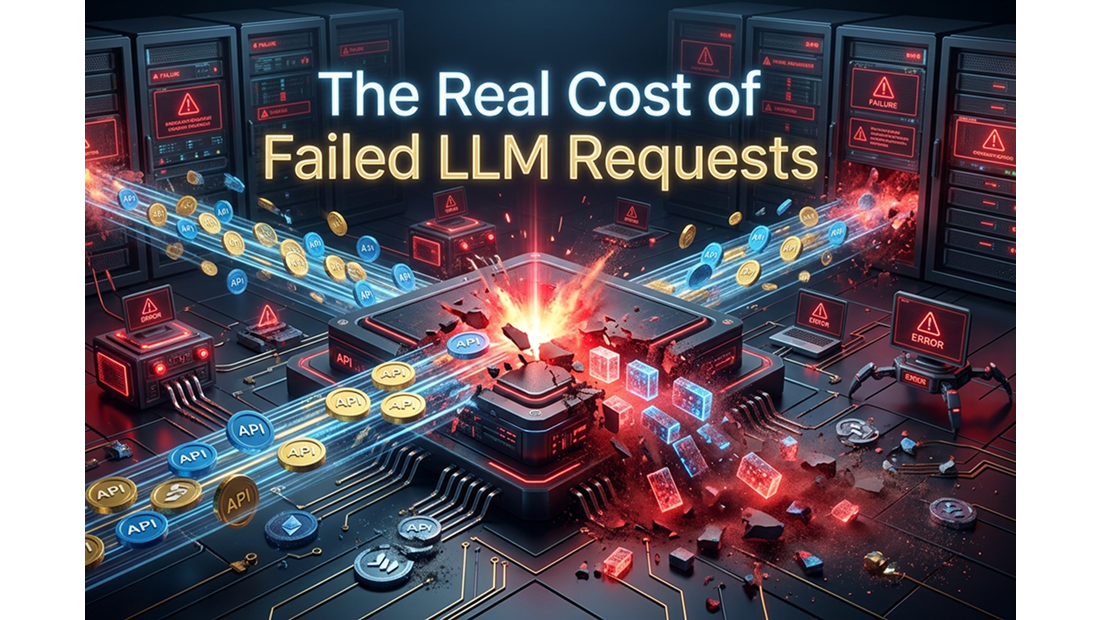
Failed LLM requests incur costs far beyond wasted tokens by inflating serverless compute bills, breaking complex agent workflows, and degrading user experience. Implementing dynamic multi-provider routing automatically redirects failed calls to secondary models in milliseconds, ensuring zero-downtime reliability for production AI applications.
%201.png)
This post outlines an optimized multi-model architecture that dynamically routes sub-tasks—such as intent classification, deep reasoning, and code execution—to specialized models like Gemini 3.6 Flash, Claude Opus 5, and GPT-5.6. Orchestrated through a unified API client, this pipeline strategy drastically cuts latency and cost while delivering peak performance across complex enterprise workflows.
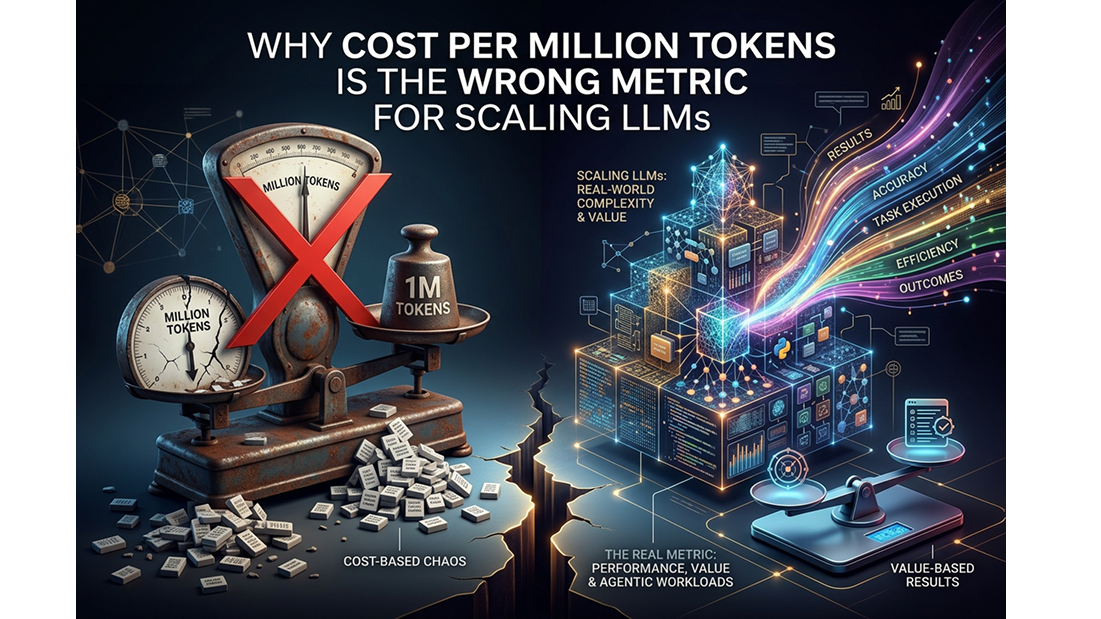
Evaluating LLMs solely on headline "cost per million tokens" leads to severe budget overruns because it ignores tokenizer efficiency differences, schema retry rates, output verbosity, and latency overhead. To optimize real production expenses, engineering teams must measure Effective Cost per Task (ECPT) and implement dynamic model routing, prompt caching, and automated fallback mechanisms.
%201.png)
This technical guide provides a direct comparison of the context windows, API costs, and latency metrics for Kimi K3, Fable 5, and GPT-5.6 Sol. It showcases how developers can streamline their AI infrastructure by dynamically routing and orchestrating all three models through AnyAPI.ai's unified gateway.
%201.png)
This article compares LLM gateways, contrasting Portkey's complex, enterprise-grade LLMOps platform with AnyAPI.ai's streamlined, zero-configuration unified proxy. While Portkey fits large enterprise compliance and prompt-management needs, AnyAPI.ai is positioned as the faster, vendor-lock-in-free choice for agile teams requiring ultra-low latency and simple multi-model routing.
This guide provides a comprehensive framework for implementing high-availability AI architecture using multi-LLM fallback strategies to prevent application downtime during provider outages or rate limits. By transitioning from hard-coded error handling to a unified API layer like AnyAPI.ai, engineering teams can dynamically route requests and maintain seamless user experiences without code modification.
This comprehensive developer's guide analyzes the leading open-source AI models of 2026—including DeepSeek V4-Pro, GLM-5.2, and Llama 4—focusing on their architectural efficiency, long-context windows, and suitability for autonomous agent workflows. It details how engineering teams can bypass infrastructure fragmentation and deployment complexities by leveraging AnyAPI’s unified, ultra-low latency gateway.
This article evaluates the top alternatives to the Gemini API by focusing on critical production metrics like tool execution, structural accuracy, and token costs across competing models from OpenAI, Anthropic, and DeepSeek. It ultimately demonstrates how developers can completely eliminate single vendor lock in and API outages by adopting AnyAPI.ai as a unified multi LLM orchestration layer.
Building autonomous AI agents requires shifting focus from surface-level model benchmarks to production realities like low latency, strict schema adherence, and token economics. By decoupling application logic from individual providers through a unified gateway like AnyAPI.ai, developers can prevent vendor lock-in and ensure their agents remain resilient against outages, high scale costs, and unexpected API failures.

In May 2026, the “best” AI image generator depends less on raw image quality and more on speed, edit control, text rendering, consistency, pricing, and how strict each tool’s safety filters are. This article ranks Nano Banana 2, GPT Image 2, Midjourney v7/v8, Flux 2, and Ideogram 3, explaining what each is actually best for and which one to pick for real-world scenarios like photorealism, typography-heavy design, and production workflows.
%201.svg)
Unauthorized users accessed Anthropic's advanced AI model Claude Mythos through a third-party vendor environment shortly after its controlled rollout in Project Glasswing, exploiting prior leaks and operational lapses rather than a direct core breach.
%201.svg)
In 2026, the market has split into specialized reasoning models and hyper-cheap utility models. Navigating this web of providers, rate limits, and billing cycles is the new operational challenge. This is why smart teams are moving away from direct vendor integrations and toward unified orchestration layers.

Post
LLM Hallucination Index 2026: Why Claude 4.6 Sonnet Dominates BullshitBench v2 While Reasoning Models Fail
BullshitBench v2 is out! It is one of the few benchmarks where models are generally not getting better (except Claude) and where reasoning isn't helping.
AnyAPI is a unified gateway that allows you to access multiple LLMs (like GPT-5, Claude 4, and Gemini 3) using a single integration. By leveraging the OpenAI Python SDK, it eliminates the need to manage multiple libraries or complex authentication flows.
AI video generation has crossed the threshold from novelty to production-ready tooling. This guide breaks down the best cinematic AI filmmaking tools in 2026 and how developers can integrate them effectively.
%201.svg)
Understanding AI API pricing models and implementing smart cost optimization strategies can reduce your infrastructure spend by 40-60% without compromising performance or user experience.
%201.svg)
AI-powered code reviews promise efficiency but often overlook critical bugs due to a fundamental gap in dynamic testing integration. This article explores why that happens and how bridging it with smarter orchestration can elevate your development workflow.
AI is reshaping content creation by streamlining generation, optimization, and SEO ranking processes, enabling teams to produce high-quality output at scale. This article provides practical guides and case studies to help developers and marketers leverage multi-provider AI for better search visibility and engagement.
Analyze the critical lessons of the Cloudflare outage 2025 and learn how to secure your uptime using agnostic CLI tools and self-managed infrastructure.

Discover how advancements in hardware and software make it feasible to run sophisticated AI models directly on your personal computer in 2025, democratizing access for developers and reducing reliance on cloud infrastructure. This guide explores the tools, setups, and strategies to achieve powerful local AI without high-end servers.
Prompt engineering used to matter. Now AI agents write their own prompts, fix their own mistakes, and run entire workflows without you. The job didn’t just change - it evaporated.
The AI world flipped the pricing equation. Some of the best tools in 2025 are completely free - and in many cases, they outperform the paid software they were meant to replace.
Learn how modern engineering teams use fallbacks, routing, and monitoring to keep ML models in production alive and cost-effective facing real-world data drift.

Workflow automation has moved far beyond simple “if-this-then-that” rules. Tools like n8n now let developers orchestrate entire AI-driven systems - connecting APIs, models, and data pipelines into self-running logic.
Recursive Language Models (RLMs) are redefining what it means for AI systems to “think.” By learning to reason through self-referencing loops, RLMs represent the next leap beyond standard large language models — from static responses to dynamic, evolving cognition.
Open-source or proprietary? The LLM you choose will shape your product’s flexibility, compliance, speed, and cost. Here’s how to decide.

The era of single-model dominance is over. In 2025, building smarter, faster, and more cost-efficient AI apps starts with understanding the strengths and trade-offs of today’s top LLMs. This guide walks through the best models available, backed by real-world benchmarks.
AI agents are evolving from simple, single‑task executors into complex, multi‑tool orchestrators capable of running entire workflows without human intervention. In 2025, the leap from “task runner” to “autonomous teammate” is accelerating.
You don’t need to be a machine learning expert to build with AI anymore. This guide breaks down how to create powerful AI agents without writing code.
Curious how AI actually works under the hood? This guide breaks it down – from data and models to inference and real-world application – without the fluff or jargon.
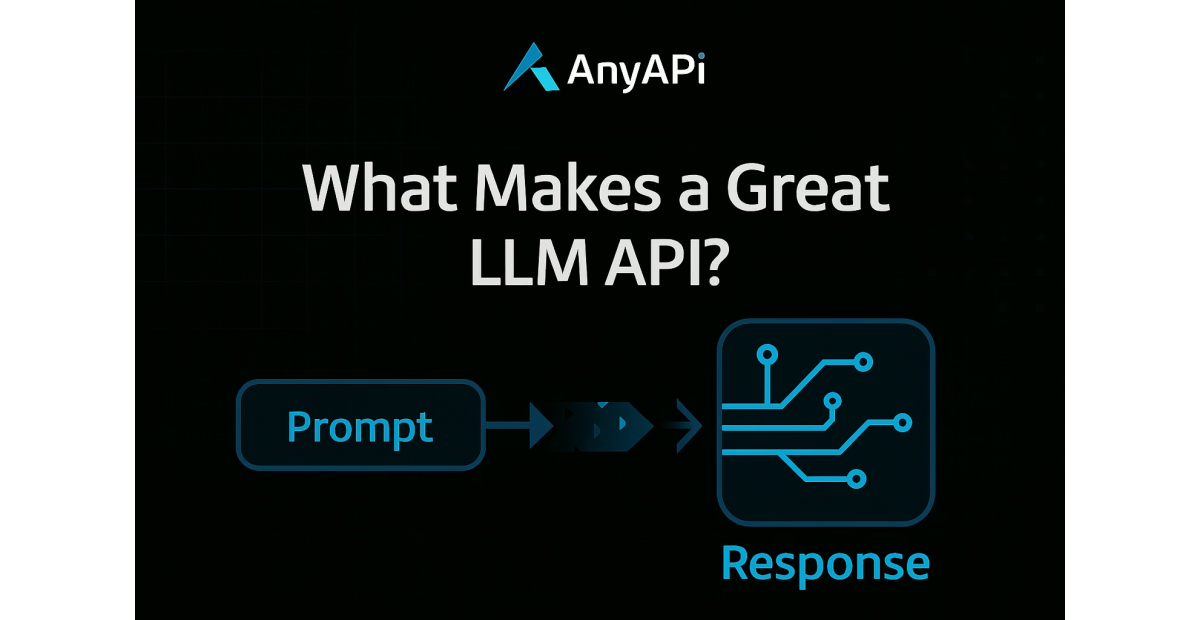
Latency, context window, cost, dev tools – LLM APIs vary wildly. We’ve tested dozens and know what really matters when you go live. Here’s what to look for (and what to avoid) in your AI infrastructure.

Going from idea to working AI feature shouldn't take weeks. See how developers are shipping fast with low-friction APIs and top-tier models. If you can write a prompt, you can build something real – today.
Claude and GPT are two of the most powerful LLMs available today—but which one actually understands your needs better? In this deep dive, we compare their strengths across context handling, tone, output quality, and real-world use cases to help developers, founders, and product teams make the right choice.

Top 20 Machine Learning APIs in 2025: The Essential Guide to AI Integration for Developers