




%201.svg)
The Real Cost of Building with AI APIs
Every developer who's shipped an AI-powered feature knows the moment when the invoice arrives and reality sets in. What started as a promising prototype with modest API costs suddenly scales into a budget line item that demands executive attention. The challenge isn't just about choosing the cheapest provider. It's about understanding pricing structures well enough to architect systems that deliver value without burning through runway.
AI API pricing in 2026 has become more complex than traditional cloud infrastructure costs. Token-based billing, context window multipliers, fine-tuning charges, and rate limit tiers create a pricing landscape that shifts based on how you use the service, not just how much. For engineering teams building production systems, this complexity translates into a critical question: how do you optimize costs without constantly refactoring your implementation every time pricing models change?
How AI API Pricing Actually Works
Most AI providers charge based on tokens, the fundamental units that models process as input and generate as output. A token represents roughly three-quarters of a word in English, though this varies across languages and use cases. The pricing asymmetry between input and output tokens matters more than most developers initially realize.
Input tokens are typically cheaper because they represent the context you provide to the model. Output tokens cost more because they require actual generation work from the model. This difference becomes significant when you're building applications with long system prompts, extensive conversation histories, or document analysis workflows where context can balloon to tens of thousands of tokens while outputs remain relatively small.
Context window pricing adds another layer. Larger context windows let you process more information in a single request, but providers often charge premium rates for these extended windows. The tradeoff involves request frequency versus context size. Sometimes splitting a task into multiple smaller requests costs less than one large context window call, even accounting for the overhead.
Fine-tuning introduces upfront training costs plus ongoing inference premiums. Custom models trained on your data typically cost more per token than base models, but the performance gains can justify the expense when generic models consistently fail at domain-specific tasks. The calculation becomes whether improved accuracy and reduced prompt engineering offsets the higher per-token cost.
The Hidden Costs Nobody Talks About
Rate limits represent the invisible cost structure that pricing pages rarely emphasize. Every provider implements throughput restrictions, and exceeding them means either failed requests or upgrading to enterprise tiers with dramatically different economics. For applications with spiky traffic patterns, this creates planning challenges that pure per-token pricing doesn't capture.
Caching strategies can reduce costs substantially but require architectural decisions early in development. Some providers offer prompt caching where repeated context portions get charged at reduced rates on subsequent requests. Building your application to leverage this means structuring prompts with static and dynamic sections, a consideration that affects both cost and code organization.
Model selection impacts costs beyond obvious capability differences. Smaller, faster models handle straightforward tasks at a fraction of the cost of flagship models. The engineering challenge involves routing requests intelligently based on complexity rather than defaulting to the most capable model for everything. A well-designed system might use a small model for 80% of requests and route only complex cases to premium tiers.
Latency costs money in ways that don't appear on API bills. Slower responses mean longer-running processes, higher infrastructure costs for maintaining connections, and degraded user experience that affects conversion rates. Sometimes paying more for a faster model reduces total system costs when you account for compute time and business metrics.
Strategies That Actually Reduce Spending
Batch processing transforms economics for non-realtime workloads. Instead of making individual API calls as requests arrive, accumulating tasks and processing them together often unlocks volume discounts or lets you use cheaper asynchronous endpoints. The architectural shift from synchronous to batch processing requires rethinking how your application handles AI interactions, but the savings compound quickly at scale.
Intelligent caching at the application layer prevents redundant API calls entirely. Before making a request, check if you've processed similar inputs recently. Semantic similarity search lets you reuse responses for questions that differ in wording but match in intent. This works particularly well for customer support, documentation search, and other domains where queries cluster around common themes.
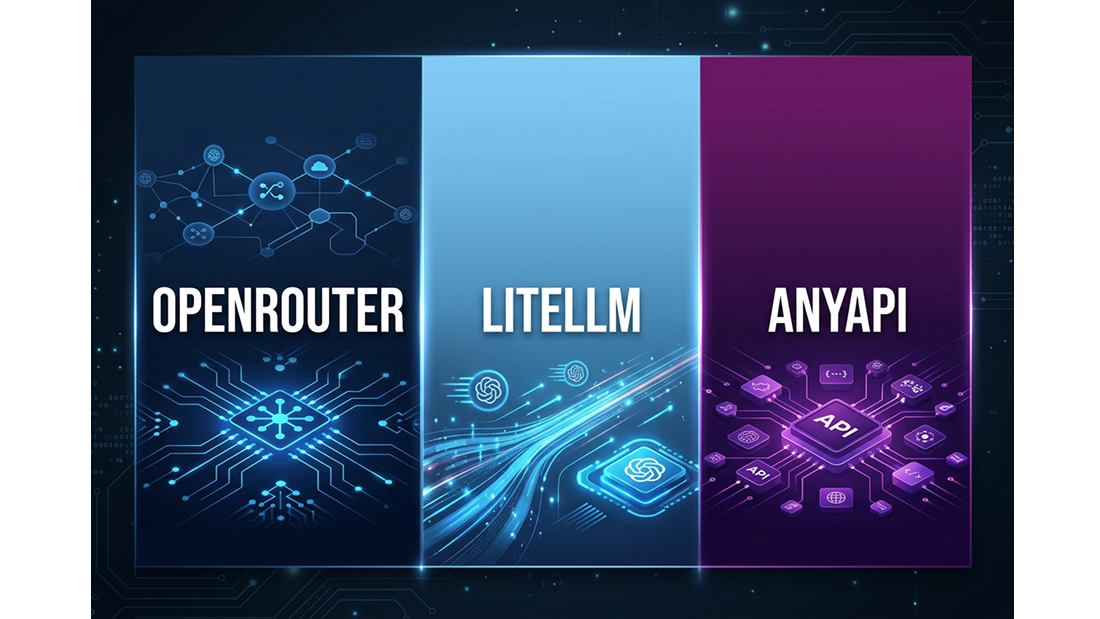
Multi-provider orchestration gives you negotiating leverage and operational resilience. Building abstraction layers that work across providers means you can shift traffic based on pricing changes, performance characteristics, or availability. This approach requires upfront investment in adapter patterns, but it prevents vendor lock-in and enables cost optimization as a continuous process rather than a one-time architecture decision.
Monitoring and attribution tooling helps identify where costs actually accumulate. Breaking down spend by feature, user cohort, or request type reveals optimization opportunities that aggregate billing hides. You might discover that a small percentage of power users generate disproportionate costs, suggesting features like usage caps or tiered pricing in your product.
Prompt engineering directly impacts costs through token efficiency. Shorter, more precise prompts that achieve the same results reduce both input and output tokens. This optimization often conflicts with the verbose, explicit prompting styles that improve model performance, creating a tension between capability and cost that requires experimentation to resolve.
Building Cost-Effective AI Infrastructure
Production systems need cost controls built into the architecture from the start. Implementing token budgets per request, user limits, and automatic fallbacks prevents runaway costs during traffic spikes or adversarial usage. These guardrails should exist at the infrastructure layer, not as application logic that can be bypassed.
Asynchronous processing patterns reduce costs by decoupling response time from API latency. Jobs that don't require immediate results can use cheaper batch endpoints or queue systems that batch requests efficiently. This architectural pattern also improves reliability by isolating AI dependencies from user-facing request paths.
Observability platforms designed for AI workloads provide visibility that generic monitoring tools miss. Tracking token usage, model performance, cache hit rates, and cost per feature in real time enables data-driven optimization decisions. Without this instrumentation, cost optimization remains guesswork based on monthly invoices rather than continuous improvement.
The developer experience matters for long-term cost management. Teams that understand pricing implications make better architectural decisions throughout the development process. Building internal tooling that surfaces cost estimates during development, not just in production, helps engineers internalize the economic impact of their implementation choices.
The Path Forward
AI API pricing will continue evolving as the market matures and competition intensifies. The providers that survive will likely be those offering not just capability but predictable economics and flexible deployment options. For engineering teams, the winning strategy involves building systems that adapt to pricing changes without requiring complete rewrites.
The future of AI infrastructure lies in platforms that abstract away provider-specific complexity while giving developers control over cost and performance tradeoffs. This means tools that handle routing, caching, monitoring, and failover across multiple providers with unified interfaces that don't leak implementation details into application code.
AnyAPI helps developers build this kind of resilient, cost-optimized AI infrastructure through a unified gateway that connects to multiple providers. By centralizing access and adding intelligent routing, caching, and observability, teams can optimize spending while maintaining the flexibility to adapt as the AI landscape continues to shift.