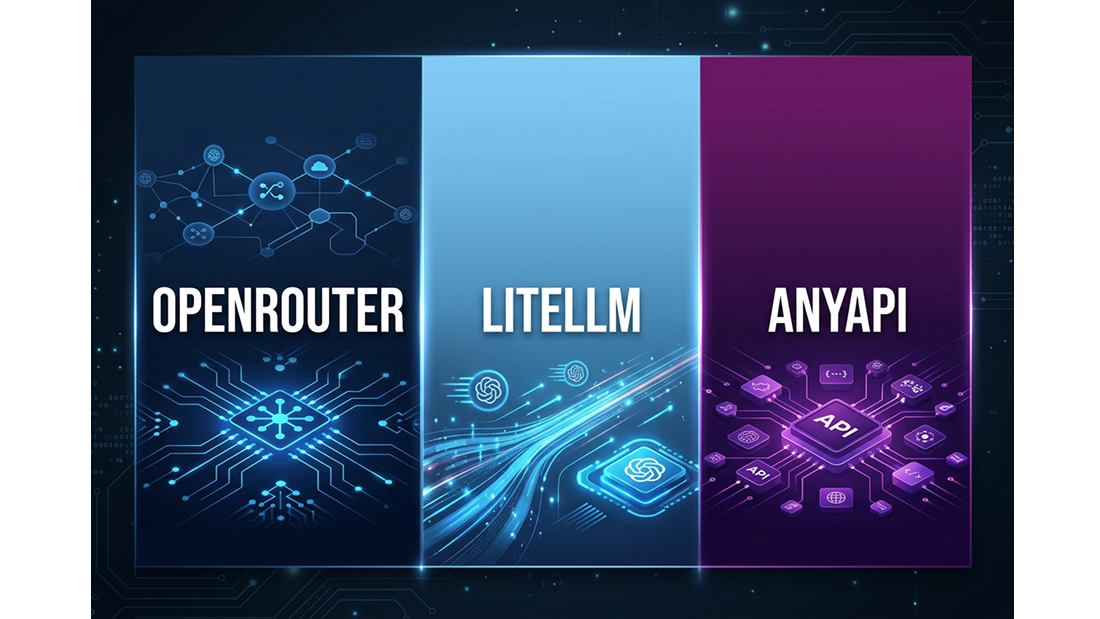





Just a couple of years ago, developers had a simple answer to the question, “Which LLM should I use?” It was GPT, maybe 4, maybe 5. Today? That decision has gotten more nuanced, and more powerful. The market has diversified rapidly, with Claude, Gemini, Mistral, Command R+, and others offering distinct trade-offs in speed, context length, and cost.
If you’re building AI products in 2025, understanding these options is no longer a nice-to-have, it’s critical infrastructure.
Top LLMs in 2025: A Quick Overview
Here’s a breakdown of the leading contenders and what they’re good at.
GPT-4o (OpenAI)
- Best for: General-purpose reasoning, multi-modal tasks
- Context Length: 128k
- Strengths: High accuracy, great tool integration, massive ecosystem
- Weaknesses: Can be slower and more expensive compared to others
Claude 3.5 Sonnet (Anthropic)
- Best for: Cost-effective long-context reasoning
- Context Length: 200k+
- Strengths: Fast, context-aware, strong safety guardrails
- Weaknesses: Slightly weaker on coding benchmarks vs. GPT-4o
Gemini 1.5 Pro (Google DeepMind)
- Best for: Multimodal capabilities and large context tasks
- Context Length: 1M tokens
- Strengths: Incredible context retention and Google ecosystem integration
- Weaknesses: Tooling still catching up
Mistral Medium & Mixtral (Mistral)
- Best for: Fast inference, on-premise deployment
- Context Length: 32k (up to 65k unofficially)
- Strengths: Open-weight models with great latency
- Weaknesses: Less strong in multi-turn or highly nuanced language tasks
Command R+ (Cohere)
- Best for: RAG and enterprise search
- Context Length: 128k
- Strengths: Built for retrieval, excels at embedding + generation
- Weaknesses: Less fine-tuned for open-ended chat
When to Use Which Model (and Why)
Even in 2025, no single model “wins” across the board. The trick is to route tasks based on strengths. For example:
- Use Claude 3.5 for summarizing massive PDFs.
- Pick GPT-4o for nuanced tool-augmented reasoning.
- Lean on Mistral or Mixtral for cheap, fast completions.
- Rely on Command R+ when doing RAG over structured company docs.
If your application can dynamically decide which model to use, you unlock significant savings, in cost, latency, and even hallucination control.
Model Routing in Action
Here’s a basic implementation of model routing logic using pseudocode:
In production, you'd want more context-aware scoring and fallback logic, but this illustrates the principle.
Why This Matters More Than Ever
In the current AI landscape, models are being commoditized, but performance isn’t. Developers and AI product teams that understand which LLM does what best will dramatically reduce cost per output, avoid overengineering, and speed up product iterations.
Moreover, the rise of multi-model orchestration tools means you no longer need to commit hard to one provider or one price point.
Think in Models, Not Model
Defaulting to a single LLM worked when there was only one serious option. In 2025, it’s a bottleneck.
At AnyAPI, we’ve built infrastructure that gives you instant access to top-performing models from OpenAI, Anthropic, Google, Cohere, Mistral, and others – all behind one endpoint. You choose the task; we handle the model logic.
Let your AI stack evolve at the pace of innovation, not vendor lock-in.