




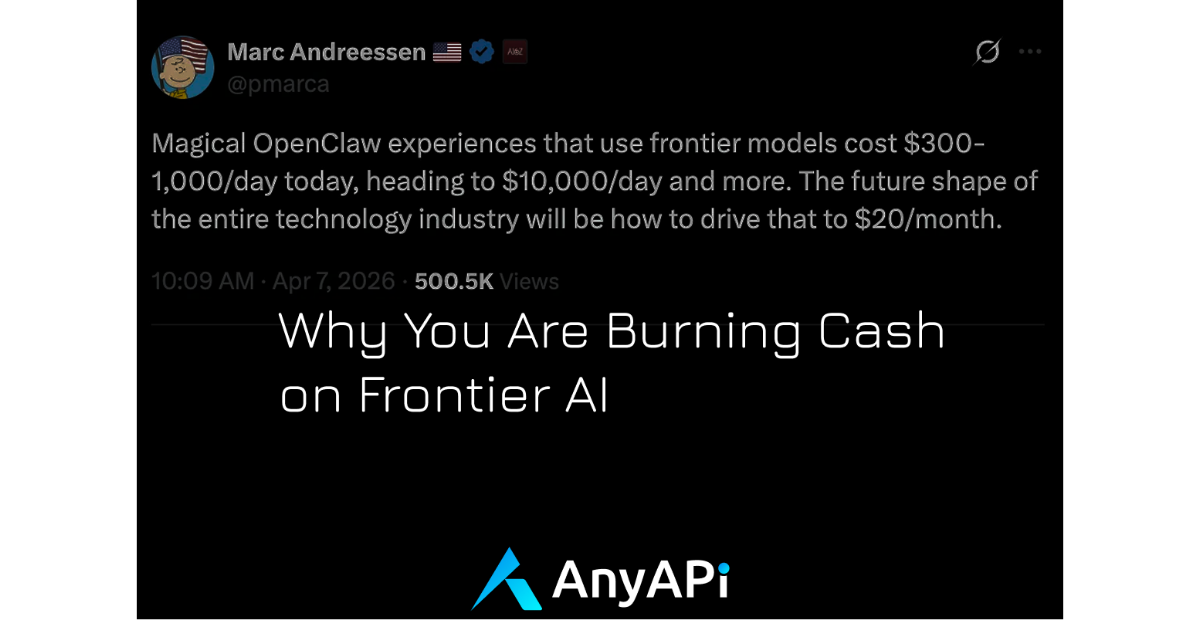
A few hours back, Marc Andreessen pointed out a brutal reality. We used to dream of a world where running complex AI agents would cost $300 a day. Instead, high-end agentic workflows are scaling toward an eye-watering $10,000 a day. When CFOs read that, panic set in. They assumed AI was becoming an exclusive luxury.
But they completely missed the actual problem. The crisis is not that artificial intelligence is getting too expensive. The crisis is that companies obsessively use the wrong models. We fell into an absurd mental trap where we assume the most expensive model is the only valid option. You do not need a trillion-parameter brain to format a JSON string. You are essentially renting a Ferrari to drive down the street for milk. It is fast, shiny, and completely stupid.
The path to a sustainable $20 a month AI budget per developer is not waiting for frontier models to get cheaper. It is applying common sense.
The Math of Overpayment
Let us look at the actual mathematical damage happening in your server room. If you blindly hit the top-tier APIs in April 2026, the price tags drain your budget fast.
Claude 4.6 Opus sits at $5.00 per million input tokens and $25.00 for output. GPT-5.2 demands roughly $1.75 for input and $14.00 for output. Google’s Gemini 3 Pro charges around $2.00 and $12.00.
Now, look at the mid-tier alternatives. DeepSeek V3.2 costs an almost laughable $0.56 per million input tokens and $1.68 for output. Alibaba’s Qwen3 Max sits at $1.04 for input and $4.16 for output. MoonshotAI’s Kimi K2.5 gives you massive context for just $0.60 on input and $2.50 on output.
Let us do the math for a mid-sized company. Imagine your platform processes 500 million tokens a month — standard volume for a support bot or background content engine. Running that workload through Claude Opus 4.6 costs about $15,000. Running it through DeepSeek V3.2 or Qwen3 Max drops your total cost to roughly $800.
You are actively choosing to pay a $14,200 “brand tax” every month. For what? The user cannot tell if an apology email was generated by GPT-5.2 or Qwen3 Max. You are burning raw cash for a placebo effect.
The Myth of “Frontier or Nothing”
Marketing departments at the big three AI labs executed a brilliant psychological campaign. They convinced an entire generation of developers that “frontier capabilities” equal “basic functionality.” They want you to believe that if you do not use the model with the highest SWE-bench score, your product is flawed.
A true frontier model possesses deep, multi-step logical reasoning and maintains coherence across massive context windows. Those are impressive feats. But here is the harsh truth: they are completely unnecessary for 90 percent of the tasks your business actually executes.
Look at the reality:
- Customer Support: You need strict instruction following, not an AGI-level intellect. Qwen Plus 0728 reads your docs and spits out the correct answer perfectly.
- Content Generation: Drafting standard emails with a massive model is slow and expensive. Claude 4.5 Haiku is faster, cheaper, and writes punchy text.
- Data Classification: Categorizing feedback into “bug” or “feature”? DeepSeek V3.2 hits the exact same accuracy metrics as premium models for a fraction of a cent.
- Coding Assistance: Fixing boilerplate or local setups? Qwen3 Coder Plusdominates code completion without the premium price tag.
You only need a frontier model to architect a complex database migration or conduct deep scientific reviews. For the rest of your operations, you are throwing money into a furnace.
Why Companies Refuse to Switch
If the math is this obvious, why is the tech industry still getting ripped off?
First, there is fear. Engineering managers are terrified that if they swap GPT-5 for Qwen and a single bug occurs, they will be blamed for cutting corners. They buy the expensive model purely as career insurance.
Second, vendor lock-in. OpenAI and Anthropic build sticky ecosystems. Before you know it, your codebase is tightly coupled to their specific tool-calling formats. Extracting yourself feels like open-heart surgery.
Finally, there is lazy inertia. “GPT works fine, so why mess with it?” You should mess with it because that lazy inertia quietly costs you three senior developer salaries every month.
The Solution: Smart Routing
The modern era of AI engineering is no longer about finding one magical model to rule your codebase. The actual solution is Smart Routing.
Instead of a lazy, frontier-first approach where every single query hits a $30 endpoint, adopt an efficiency-first architecture.
Roughly 90 percent of your daily requests — summarizing chats, JSON formatting, text classification — should route automatically to cheap models like Qwen3 or DeepSeek.
The remaining 10 percent — the complex edge cases where the cheap model returns low confidence or fails a test — escalate dynamically to Claude Opus 4.6 or GPT-5.4.
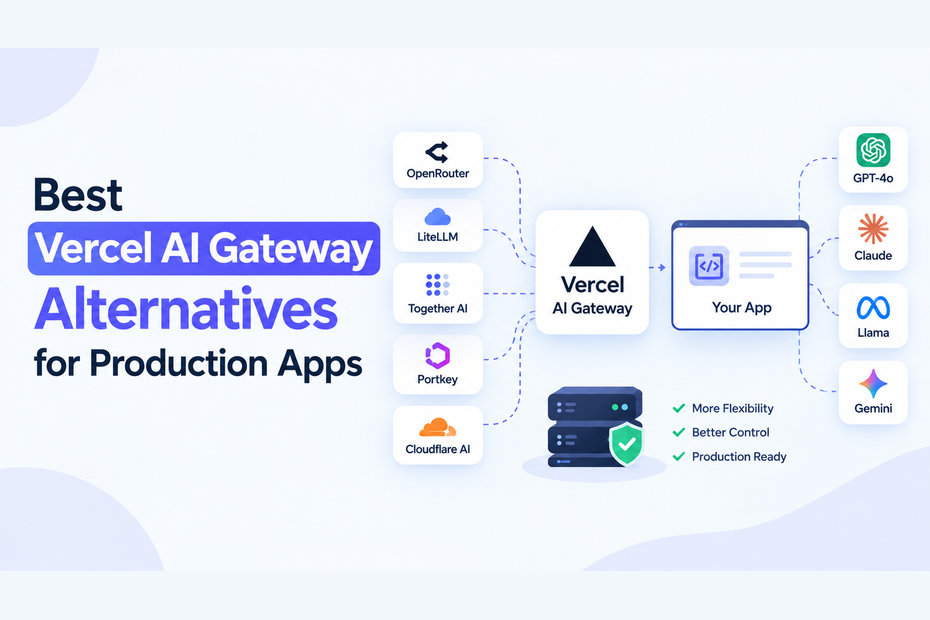
You get the exact best of both worlds. You keep high-end reasoning for hard edge cases, but permanently stop paying hard-stuff prices for easy-stuff work. By using anyapi.ai as your single access point, you write the integration logic exactly once. When you want to save money, you literally just change a single string parameter in your code.
The Bottom Line
The future of the software industry is not waiting for massive frontier models to get cheap. Compute costs are simply too high for that. The future belongs to engineering teams smart enough to stop using massive models where they do not belong.
Kill the Ferrari to the grocery store workflow. High-end AI is a precious computational resource. Save it strictly for tasks that require massive cognitive power. For the rest of your daily operations, mid-tier alternatives are already here, they are incredibly fast, and they are begging to save your budget.
Stop the bleeding. Head over to anyapi.ai, set up a single API key, and route your next ten thousand background tasks through DeepSeek or Qwen. Check the results. Check the bill. You will never go back.