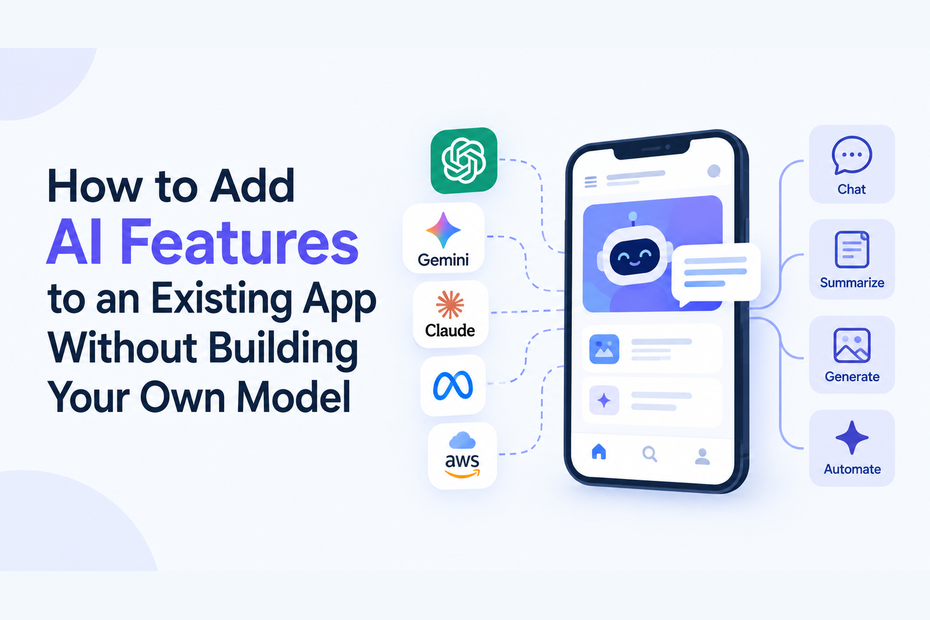





As of February 2026, the artificial intelligence landscape has reached a point of extreme efficiency. Intelligence is no longer a luxury but a commodity. For developers, startups, and indie hackers, the primary goal is finding the best performance per dollar. The market has moved away from expensive monolithic models toward highly optimized, smaller models that deliver high reasoning capabilities for a fraction of the cost.
This guide breaks down the most affordable AI API options available in 2026, helping you scale your applications without breaking your budget.
What to Look for in a Cheap AI API
Choosing a low cost provider involves more than just looking at the price per million tokens. You must consider the following factors to ensure you are getting true value:
Price per 1M Tokens (Input and Output):
In 2026, most providers use an asymmetrical pricing model where output tokens cost more than input tokens.
Context Window:
The ability to process large amounts of data in one go is vital for RAG (Retrieval Augmented Generation) and document analysis.
Reasoning Quality:
A cheap model that requires three prompts to get a correct answer is more expensive than a pricier model that gets it right the first time.
Inference Speed:
For real time applications like voice assistants or chatbots, the speed of the API is just as important as the price.
The Top Affordable AI API Providers in 2026
1. Google Gemini (2.5 Flash and Flash Lite)
Google has solidified its lead in the high volume and long context market. The Gemini 2.5 Flash Lite model is specifically designed for developers who need to process millions of requests daily.
Price:
0.07 USD per 1M input tokens and 0.30 USD per 1M output tokens.
Strengths:
Massive context window of up to 2 million tokens and native multimodal support for video and audio.
Best Use Case:
Large scale data extraction, video analysis, and summarizing massive document libraries.
2. DeepSeek (V3 and R1)
DeepSeek remains the primary price disruptor from the open weight community. Their models often rival the reasoning power of GPT 5 class models while maintaining prices that are significantly lower.
Price:
0.12 USD per 1M input tokens and 0.24 USD per 1M output tokens.
Strengths:
Exceptional performance in coding and mathematics. Their R1 reasoning model is particularly effective for complex logic.
Best Use Case:
Coding assistants, technical documentation, and complex logical reasoning.
3. OpenAI (GPT 4o mini and GPT 5 Mini)
OpenAI continues to offer highly reliable mini versions of their flagship models. These are the gold standard for developers who prioritize ecosystem stability and high quality JSON outputs.
Price:
0.15 USD per 1M input tokens and 0.60 USD per 1M output tokens for GPT 4o mini.
Strengths:
Excellent steerability and the most robust documentation and community support in the industry.
Best Use Case:
General purpose chatbots, structured data generation, and simple classification tasks.
4. Meta Llama 3.3 (via Groq)
Meta provides the models, but Groq provides the speed. By using Groq specialized LPU hardware, developers can access Llama 3.3 at prices that are nearly negligible.
Price:
0.05 USD per 1M input tokens and 0.08 USD per 1M output tokens for the 8B version.
Strengths:
The fastest inference speeds in the world. Responses are nearly instantaneous.
Best Use Case:
Real time voice agents, interactive gaming, and low latency chat interfaces.
5. Anthropic Claude (4.0 Haiku)
Claude 4.0 Haiku is the best choice for developers who need a human touch. Anthropic models are known for their nuanced writing and lower hallucination rates.
Price:
0.80 USD per 1M input tokens and 4.00 USD per 1M output tokens.
Strengths:
High emotional intelligence in text and excellent safety filters.
Best Use Case:
Customer support, creative writing, and sensitive content moderation....
How to Choose the Right Cheap AI API for Your Use Case
The cheapest AI API is the one that fits your specific workflow without requiring extra work.
For Massive Context and RAG, the best choice is Gemini 2.5 Flash Lite due to its 2M context window. For Coding and Logic, DeepSeek V3 is the current leader for technical tasks on a budget. If you need Instant Speed for real time apps, Llama 3.3 via Groq is the primary option. For General Reliability, GPT 4o mini remains the standard for most apps. For Human Nuance and safety, Claude 4.0 Haiku is the preferred model.
Try All AI Models in One Place: AnyAPI.ai
Keeping track of multiple API keys, billing cycles, and different documentation formats is one of the biggest challenges for modern developers. AnyAPI.ai simplifies this by providing a single unified gateway to all major AI models, including OpenAI, Google, Anthropic, and DeepSeek.
With AnyAPI.ai, you can access every model through a single integration. This allows you to test different models side by side to see which one gives you the best results for your specific prompt. You maintain one balance and use one API key, which significantly reduces administrative overhead. It is the most cost effective way to build because it allows you to switch to a cheaper model the moment it is released without changing your code.
AnyAPI.ai is perfect for developers who want to stay flexible. If DeepSeek lowers their prices or Google releases a faster version of Gemini, you can pivot instantly. This ensures your application is always running on the most efficient and affordable technology available.
Ready to simplify your development?
Sign up for AnyAPI.ai and get instant access to every major AI model with one single key.
Conclusion
The race to the bottom in AI pricing has made it possible for any developer to build world class applications. By choosing high value models like Gemini Flash Lite or DeepSeek V3, you can scale your projects while keeping your margins high. Using a platform like AnyAPI.ai ensures you are never locked into one provider and always have access to the cheapest AI API on the market.