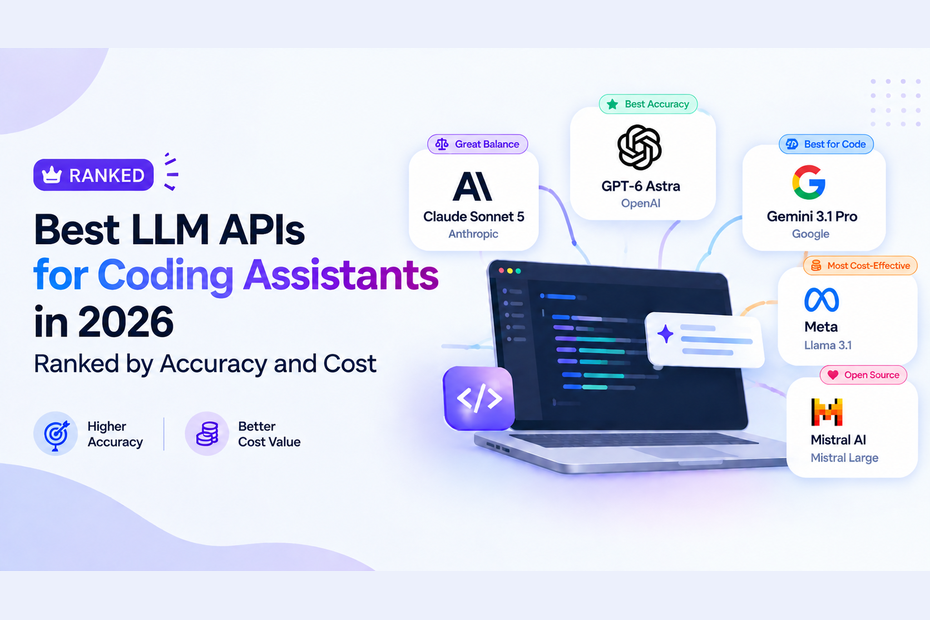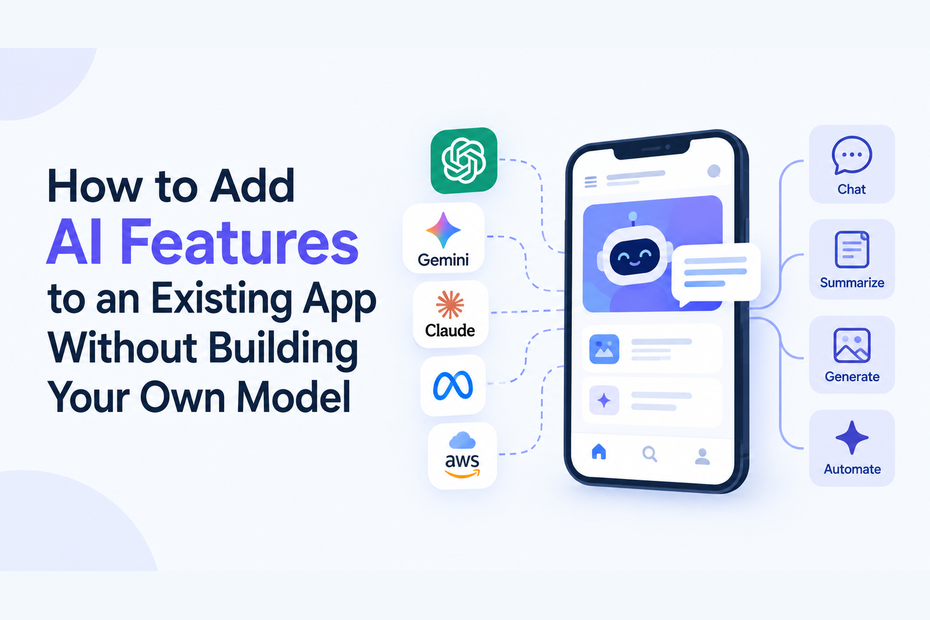





The AI landscape moves fast. In the past year alone, we’ve witnessed a relentless race between OpenAI, Anthropic, Google, and open-source models like Meta's LLaMA and Mistral. Each week brings a new benchmark leader, a larger context window, or a massive price drop.
For developers and AI startups, this rapid evolution is both a blessing and a curse. While you have access to increasingly powerful models, the underlying engineering reality is brutal. Hardcoding your application to a single LLM provider makes your entire product brittle.
If you want to maintain a competitive edge, you need agility. You need the ability to switch from Claude 3.5 Sonnet to GPT-4o, or route simple tasks to LLaMA 3.1 on the fly, without rewriting your core backend. This is where a Unified LLM API becomes essential for modern production stacks.
The Fragmented State of the AI Ecosystem
Building a commercial AI product used to be simple: you generated an OpenAI API key, imported their official SDK, and started sending requests to gpt-5 or gpt-5.5.
Today, that approach introduces significant infrastructure liabilities:
- Vendor Lock-In: Tying your codebase to a specific provider’s SDK structure means that migrating to a competitor requires a massive refactoring effort.
- API Fragmentation: Every AI vendor thinks their payload structure is the gold standard. OpenAI uses
messageswith specific object roles. Anthropic introduces unique system prompt placements and block structures. Google Gemini relies on its own distinct content shapes. - Single Points of Failure: Outages happen. Rate limits get hit. If your application relies solely on one provider's endpoint, an outage on their side means downtime for your users.
- Suboptimal Cost & Performance: Using a premium flagship model for basic text classification or simple summarization is an expensive mistake. Ideally, you should route simple queries to cheaper models and save heavy reasoning tasks for top-tier systems.
Maintaining custom wrappers, custom error handlers, and separate billing accounts for five different AI vendors is a massive distraction from building your actual product.
What is a Unified LLM API?
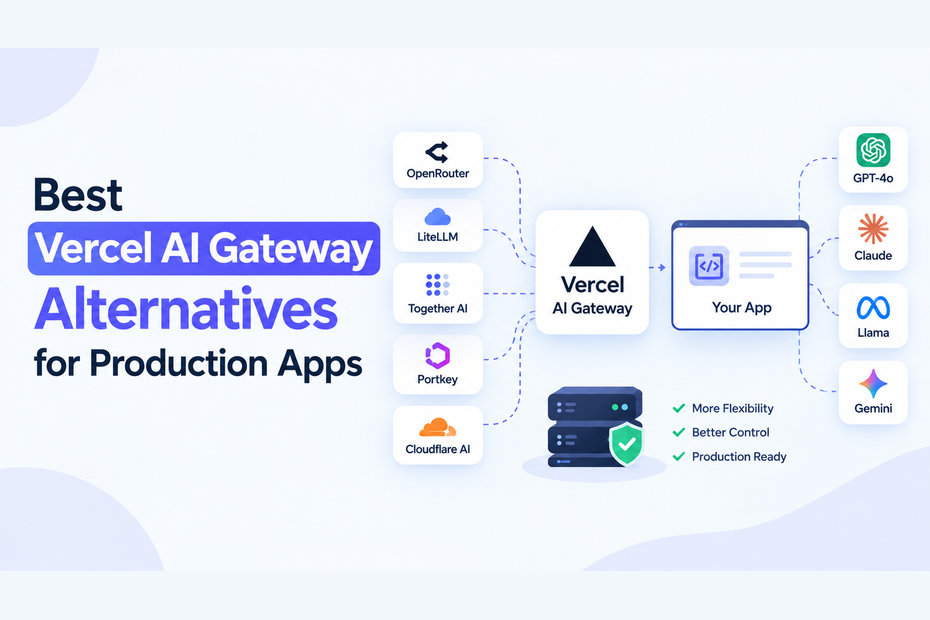
A Unified LLM API acts as an intelligent abstraction layer positioned between your application backend and the chaotic world of upstream AI providers.
Instead of managing multiple SDKs, environmental tokens, and distinct request-response Lifecycles, you interact with one single endpoint using a completely standardized JSON schema. The abstraction layer handles payload translation, authentication, retries, and network optimization under the hood, passing back a clean, predictable response.
Key Architectural Benefits of Modern LLM Unification
1. Instant Model Agility
Want to test whether a newly released model cuts your inference costs in half? With a unified API, you don't write new code. You simply change a string parameter in your request payload (e.g., changing "model": "openai/gpt-5" to "model": "Anthropic/claude-4-5-sonnet"). This reduces evaluation and deployment times from days to seconds.
2. Built-In High Availability and Fallbacks
Production-grade systems require redundancies. If a request to your primary model fails due to a 429 Rate Limit Exceeded or a 503 Service Unavailable, a unified layer can automatically intercept the failure and route the exact same payload to a fallback model of equivalent capability.
3. Consolidated Observability and Billing
Instead of tracking usage across OpenAI's developer platform, Anthropic's console, and Google Cloud Vertex AI, a unified gateway aggregates your analytics. You get a single invoice, one dashboard to monitor tokens consumed, and a consolidated view of latency and error rates across all models.
Technical Comparison: Direct SDKs vs. Unified Approach
Let’s look at how much boilerplate code changes when moving from multi-vendor management to a unified architecture.
FeatureDirect SDK IntegrationUnified LLM API ApproachCode FootprintMultiplied by every provider used.One client, one single schema.Authentication4+ unique API Keys to manage.1 Master API Key.Payload SchemaFragmented (OpenAI messages vs. others).Fully standardized across all targets.Error HandlingVendor-specific exceptions & error codes.Normalized HTTP status codes & errors.Failover LogicManual try/catch blocks with complex retries.Automated, seamless server-side routing.
How AnyAPI.ai Solves the Multi-Model Challenge
AnyAPI.ai provides a highly optimized, developer-first infrastructure built explicitly to eliminate LLM fragmentation. It serves as your universal proxy to the world's leading AI models, offering enterprise-grade reliability with zero operational overhead.
- Zero-Latency Overhead: Engineered on a globally distributed edge network, AnyAPI minimizes network hops, ensuring that proxying your requests introduces no perceptible latency.
- True Schema Standardization: We map every upstream payload to a clean, intuitive structure. You get absolute feature parity for streaming responses, function calling (tool use), and structured outputs (JSON mode).
- Production-Ready Resilience: AnyAPI isn't just a simple proxy; it's an active gateway featuring configurable fallback arrays, automatic retries, and intelligent circuit breakers designed to guarantee 99.99% uptime for your AI features.
Step-by-Step Production Implementation
Let’s look at a concrete example. Imagine you want to send a prompt to an AI model, but you want a system that is robust enough to handle model switching seamlessly.
Here is how straightforward it is to implement using AnyAPI.ai with a standard fetch request in Node.js or Python.
The Standardized Request Payload
JSON
 "max_tokens": 1000
}
{
  "model": "anthropic/claude-4-5-sonnet",
  "messages": [
    {
      "role": "system",
      "content": "You are an expert backend architect."
    },
    {
      "role": "user",
      "content": "Explain the architectural difference between REST and gRPC."
    }
  ],
  "temperature": 0.7,
  "max_tokens": 1000
}
Implementing in Node.js
JavaScript
import fetch from 'node-fetch';

async function generateAIResponse() {
  const apiKey = process.env.ANYAPI_API_KEY;

  const response = await fetch('https://api.anyapi.ai/v1/chat/completions', {
    method: 'POST',
    headers: {
      'Content-Type': 'application/json',
      'Authorization': `Bearer ${apiKey}`
    },
    body: JSON.stringify({
      model: 'anthropic/claude-4-5-sonnet', // Seamlessly switch to 'openai/gpt-4o' anytime
      messages: [
        { role: 'user', content: 'What is a unified API?' }
      ],
      temperature: 0.2
    })
  });

  const data = await response.json();
  console.log(data.choices[0].message.content);
}

generateAIResponse();
If you suddenly decide that gpt-5 handles this specific prompt better, you simply modify the model string. The rest of your data parser, streaming engine, and logging systems remain completely untouched.
Frequently Asked Questions
Does using a unified API introduce latency?
When built correctly, the latency introduction is negligible (typically under a few milliseconds). AnyAPI.ai utilizes edge-routing infrastructure to ensure that the time spent processing and normalizing the request is completely overshadowed by the raw generation time of the LLM itself.
How are advanced features like Function Calling / Tool Use handled?
AnyAPI.ai standardizes the declaration of tools and functions. You pass your schema using a singular format, and our gateway translates it perfectly into OpenAI's tools or Anthropic's tool_choice syntax, translating the resulting arguments cleanly back to your application.
Is my data safe when passing through a unified proxy?
Security is paramount. AnyAPI.ai operates under a strict zero-data retention policy for your request payloads. We act as a pass-through proxy layer, meaning your prompts and completions are streamed directly to and from the upstream providers over secure, encrypted TLS channels without ever being stored on our servers.
How does billing work with AnyAPI.ai?
You no longer need to track balances, manage corporate cards, or handle complex enterprise billing across OpenAI, Anthropic, and Google simultaneously. You maintain a single balance with AnyAPI.ai, and you are billed precisely based on the token consumption rates of the specific models you execute.
Ready to Future-Proof Your AI Stack?
Stop wasting engineering hours writing boilerplate code for fragmented APIs. Build a reliable, multi-model infrastructure today with AnyAPI.ai.